Addiction Through a Philosophical Lens: A Deep Dive
Dr. Eleanor Vance ·
Listen to this article~4 min
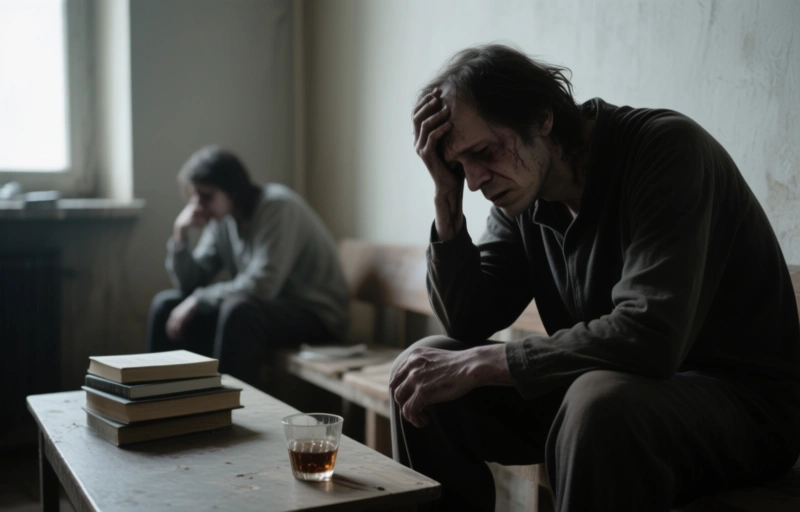
Philosopher and neurobiologist Owen Flanagan joins Jack Russell Weinstein to explore addiction through philosophy, psychology, neuroscience, and lived experience. They discuss responsibility, recovery, social influences, and the challenges of confronting addiction.
Addiction is one of those topics that feels both deeply personal and impossibly complex. We've all seen it play out in someone's life, maybe our own, and it raises questions that science alone can't answer. That's why a conversation between philosopher and neurobiologist Owen Flanagan and host Jack Russell Weinstein is so valuable. They don't just look at the brain chemistry or the behavioral patterns. They dig into the messy, human side of addiction: what it means to be responsible, how recovery really works, and why our social world matters so much.
### The Big Question: Who's Responsible?
One of the first things Flanagan tackles is responsibility. When someone is addicted, are they making a choice? It's a question that can feel like a trap. If we say addiction is a disease, do we let people off the hook? If we say it's a choice, are we being too harsh? Flanagan argues it's not that simple. He points out that addiction involves a loss of control, but not a complete loss of agency. Think of it like a storm. You can't stop the rain, but you can decide whether to stand in it or find shelter. Recovery, then, is about rebuilding that decision-making muscle, even when the storm is raging.
### Recovery Isn't a Straight Line
Weinstein and Flanagan also explore what recovery looks like from the inside. It's not just about quitting a substance or a behavior. It's about rebuilding a life. Flanagan emphasizes that recovery often requires a complete shift in identity. You have to let go of the person you were and figure out who you want to be. That's terrifying and liberating at the same time. He talks about how social support, like a 12-step group or a close community, can be the scaffolding that holds you up while you do that work. Without that support, the climb is a lot steeper.
### The Social Side of Addiction
Here's where things get really interesting. Flanagan argues that addiction isn't just an individual problem. It's shaped by our environment. Think about it: if you're surrounded by people who drink heavily, your own drinking might seem normal. If you're lonely or stressed, a substance can feel like a quick fix. Flanagan calls this the "social ecology" of addiction. He says we can't understand why someone gets addicted without looking at their world. This means that solutions have to address those social factors too. It's not enough to just treat the person. We have to change the conditions that make addiction more likely.
### Confronting Addiction Head-On
The conversation also gets personal. Flanagan shares insights from his own experiences, both as a researcher and as someone who has seen addiction up close. He talks about the shame that comes with it, and how that shame can keep people stuck. Confronting addiction, he says, means facing that shame and finding a way to move through it. It's about being honest with yourself and with others, even when that honesty is painful. That's the hard part, but it's also where real change begins.
### Why This Matters for All of Us
What I love about this discussion is that it doesn't offer easy answers. Instead, it invites us to think more deeply about a problem that affects millions of people. Whether you're struggling yourself, supporting someone who is, or just trying to understand, Flanagan's perspective is a reminder that addiction is a human experience. It's not a moral failing or a simple disease. It's a complex, messy, and deeply human struggle that requires compassion, patience, and a willingness to look at the whole picture.
So, if you're ready to think about addiction in a new way, this conversation is a great place to start. It's not just about the science. It's about the philosophy of living a good life, even when things fall apart.