What Is Jewish Philosophy? A Conversation That Will Change How You Think
Dr. Eleanor Vance ·
Listen to this article~4 min
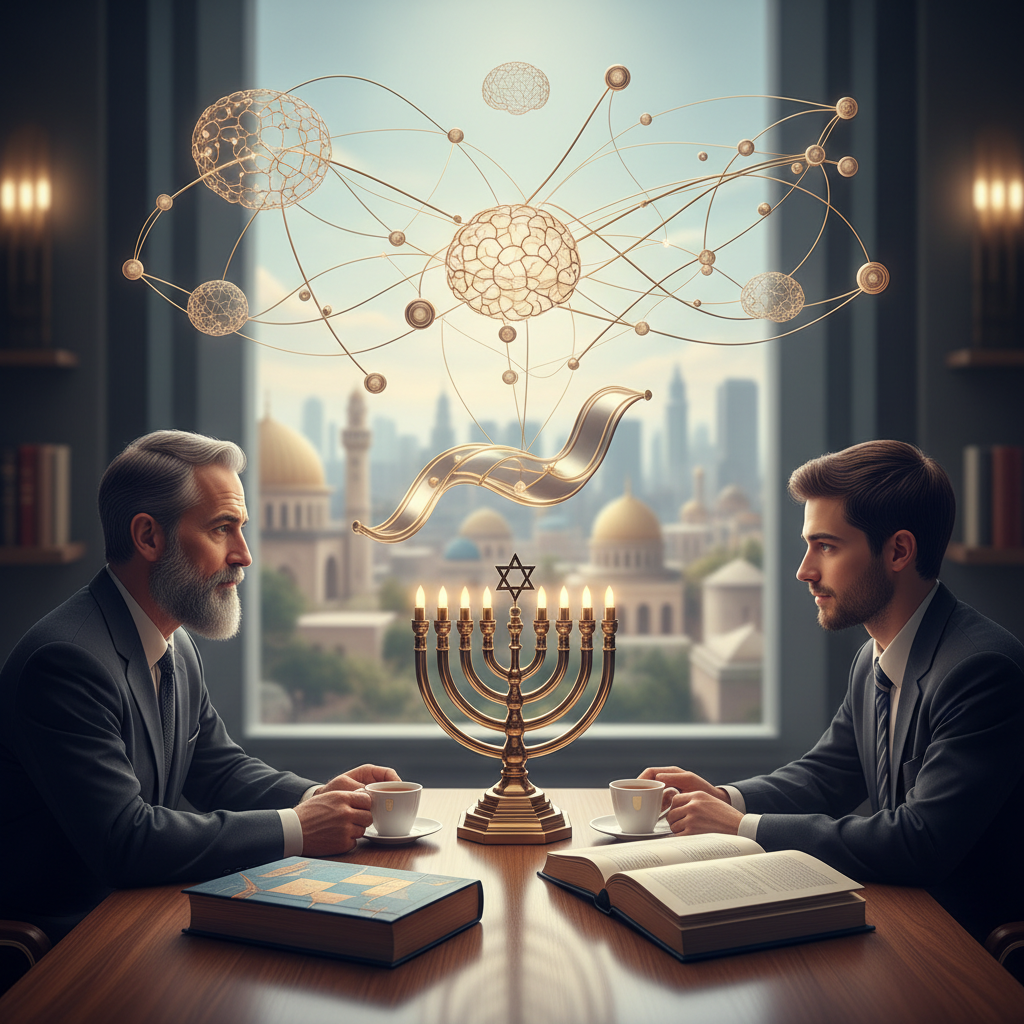
Jewish philosophy isn't just an academic niche. In this deep dive, philosophers Paul W. Franks and Yitzhak Y. Melamed reveal how marginalized thinkers challenge our deepest assumptions and reshape how we see faith, reason, and justice.
You've probably heard the term "Jewish philosophy" and assumed it's just a niche academic subject. But here's the thing: it's so much more than that. It's a way of looking at the world that has shaped some of the most profound thinkers in history, and it might just challenge assumptions you didn't even know you were holding.
In a recent episode of *Why? Philosophical Discussions About Everyday Life*, host Jack Russell Weinstein sits down with philosophers Paul W. Franks and Yitzhak Y. Melamed to unpack the history of Jewish philosophy, its central questions, and why marginalized voices matter more than ever.
### What Exactly Is Jewish Philosophy?
At its core, Jewish philosophy is the intersection of ancient Jewish thought and the big questions that have puzzled humans for centuries. It's not just about religion or tradition. It's about asking why we exist, what makes a life meaningful, and how we should treat one another.
The conversation explores how Jewish thinkers have wrestled with these questions for over two thousand years, often in dialogue with Greek philosophy, Islamic thought, and modern secular ideas. This isn't a dusty history lesson. It's a living, breathing tradition that continues to evolve.
### Why Marginalized Thinkers Matter
One of the most fascinating parts of the discussion is how Jewish philosophers, often outsiders in the societies they lived in, brought fresh perspectives to age-old problems. When you're on the margins, you see things that those in the center simply miss.
Franks and Melamed argue that this outsider status wasn't a handicap. It was an advantage. It forced Jewish thinkers to question things everyone else took for granted. Think about it this way: if everyone around you assumes the same thing, you'll never question it. But if you're the odd one out, you have no choice but to examine your own beliefs and the beliefs of others.
### The Central Questions That Still Matter Today
Here are a few of the big questions the episode tackles:
- **What does it mean to be chosen?** The idea of a "chosen people" is often misunderstood. The philosophers dig into whether this concept is about privilege or responsibility.
- **Can faith and reason coexist?** For centuries, Jewish thinkers have tried to reconcile religious belief with rational inquiry. It's a tension that still feels incredibly relevant.
- **How do we build a just society?** Many Jewish philosophical texts are obsessed with justice, charity, and communal responsibility. These aren't abstract ideas. They're practical guides for living.
### What This Means for You
You don't have to be Jewish or a philosopher to get something out of this conversation. The deeper lesson is about the value of asking hard questions, especially the ones that make you uncomfortable.
We live in a world where we're constantly told what to think, what to buy, and who to be. Jewish philosophy offers a different path. It invites you to slow down, question your own assumptions, and consider that maybe, just maybe, the people who see the world differently are the ones who see it most clearly.
### A Conversation Worth Your Time
If you've ever wondered whether philosophy has anything to say about your everyday life, this episode is a great place to start. It's not stuffy or academic in the worst way. It's a genuine, thoughtful conversation between brilliant minds that will leave you with plenty to chew on.
So grab a cup of coffee, put on your headphones, and give it a listen. You might walk away with more questions than answers. And honestly, that's kind of the point.