What's Truly Worth Saving? Valuing Objects Across Generations
Dr. Eleanor Vance ·
Listen to this article~4 min
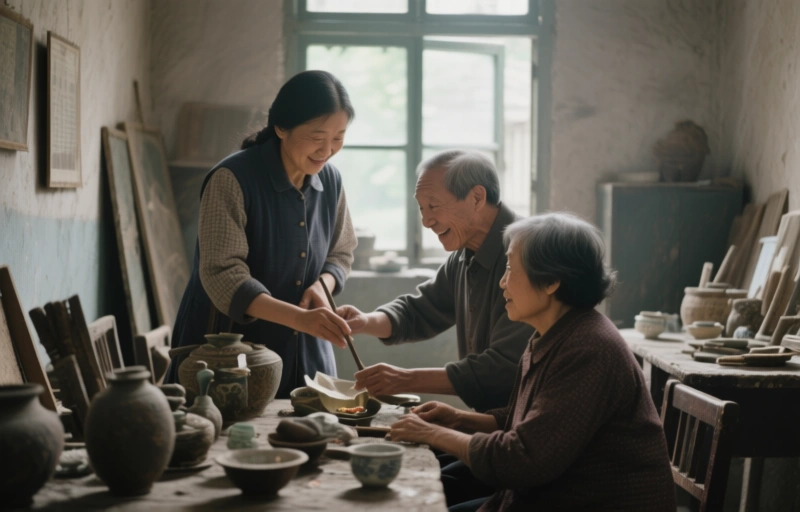
How do we decide what objects to keep and pass down? Explore the balance between timeless treasures and burdensome clutter, and discover why our choices about preservation matter for future generations.
How do we place a value on the things we keep and pass down? It's a question that sits in our attics, our storage units, and our family stories. Objects can be timeless bridges between generations, or they can become heavy burdens we carry forward without knowing why. We inherit more than stuff—we inherit decisions about what matters.
I was thinking about this recently while listening to a conversation between Jack Russell Weinstein and Wellesley philosophy professor Erich Hatala Matthes. They were exploring that very question: why should we save anything for posterity? It got me wondering about my own boxes of family photos and my grandmother's china that I never use.
### The Weight and Lightness of Objects
Some objects seem to carry their own light. My daughter's first drawing, my grandfather's pocket watch—these aren't just things. They're touchstones. They connect us to people and moments that shaped us. But then there's the other stuff. The chipped dishes nobody wants. The furniture that doesn't fit anywhere. The boxes we move from house to house without ever opening.
That's where the real question lives. Not in the obviously precious things, but in the borderline cases. The items that might have meaning, or might just be taking up space. How do we decide?
### Asking Better Questions About What We Keep
Instead of asking "Is this valuable?" maybe we should ask different questions:
- Does this object tell a story that would be lost without it?
- Does holding this item change how I feel about my family or myself?
- If this were destroyed in a fire, what would I genuinely miss?
- Am I keeping this for me, or for someone who hasn't been born yet?
These questions shift the focus from monetary value to human value. They help us separate sentiment from sentimentality.
As Professor Matthes pointed out in that discussion, preservation isn't neutral. When we choose what to save, we're making a statement about what deserves to be remembered. We're curating the past for the future, whether we realize it or not.
### The Practical Side of Preservation
Let's be honest—sometimes we keep things because deciding feels too hard. I've certainly opened a box, felt overwhelmed, and just closed it again. "I'll deal with this later." But later becomes years, and those objects become invisible parts of our landscape.
Here's what I've started doing, and maybe it'll help you too. I set aside one afternoon a month for "object decisions." I take one box, one shelf, one drawer. I pull everything out and ask those better questions. If something stays, it needs a proper home, not a temporary hiding place. If it goes, I decide whether to donate, gift to a family member, or—when necessary—let it go completely.
### What Are We Really Passing Down?
This isn't really about stuff. It's about values. It's about what we consider important enough to carry forward. When my children eventually go through my things, what will they learn about me from what I've saved? What story will my collection of objects tell?
Maybe the most valuable things we can preserve aren't objects at all, but the stories that go with them. That plain wooden spoon becomes precious when we know it was used by my great-grandmother to stir soup during hard winters. Without the story, it's just a spoon.
So here's my challenge to you—and to myself. Let's be more intentional. Let's save fewer things, but save them better. Let's attach the stories. Let's choose what represents our best selves, our most meaningful connections, our truest values. Because what we save today becomes someone else's inheritance tomorrow. And that's a responsibility worth thinking about carefully.