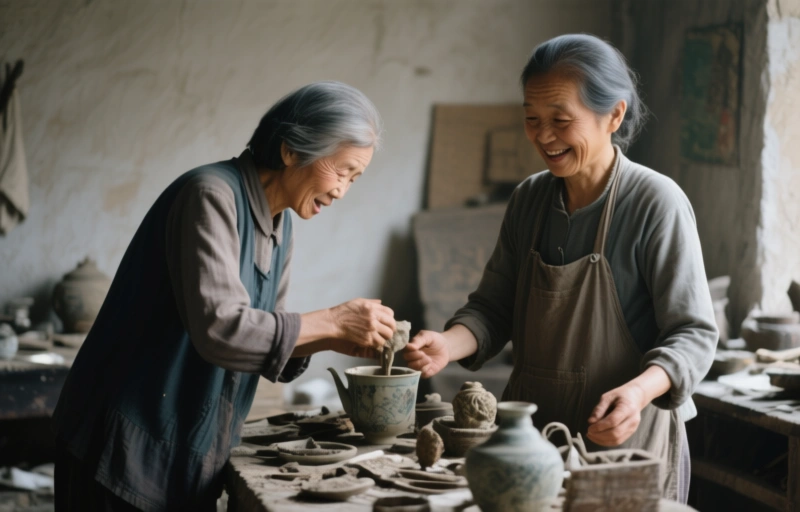
How do we decide what's worth keeping and passing down? It's a question that hits home for anyone who's ever sorted through a parent's attic or wondered about their own accumulating possessions. Objects can feel timeless, connecting us to generations past, or they can become burdens we're not sure how to carry forward.
I was thinking about this recently while listening to a fascinating conversation between Jack Russell Weinstein and Wellesley philosophy professor Erich Hatala Matthes. They were digging into that very question: why should we save things for posterity? What makes something worth preserving?
### The Weight of What We Keep
We all have those items. The family Bible with generations of births and deaths recorded in shaky handwriting. The quilt your great-grandmother stitched during long winter nights. The set of china that only comes out for holidays. These things carry stories within them—they're not just objects, they're containers of memory.
But then there's the other stuff. The boxes of papers we're afraid to throw away. The furniture that doesn't fit our homes but feels too significant to donate. The collections that meant everything to someone else, but just feel like clutter to us. That's where the burden comes in.
### Finding Value Beyond Sentiment
So how do we place actual value on these things? It's not just about monetary worth—though that can be part of it. It's about asking deeper questions:
- What story does this object tell?
- Who would miss it if it were gone?
- Does it represent something important about our family or community?
- Will it have meaning to future generations, or is its significance tied only to us?
Professor Matthes pointed out something that really stuck with me: sometimes we preserve things not for their practical use, but for what they represent. A worn-out tool might tell the story of a family trade. A simple piece of jewelry might symbolize a love story. These objects become touchstones for values we want to pass along.
### The Practical Side of Preservation
Let's be real though—we can't keep everything. Space is limited, and sometimes our attachment to objects can become unhealthy. I've seen families struggle with this, holding onto things out of guilt rather than genuine connection.
Here's what I've learned from working with people on these decisions: the most meaningful preservation often happens when we're intentional about it. We don't just accumulate—we curate. We choose what truly represents our story and let go of what doesn't.
As one wise person told me, "Sometimes the most important thing we save isn't the object itself, but the story that goes with it." That's why I encourage people to write things down. Take photos. Record conversations. The physical object might not last forever, but its meaning can.
### Looking Toward Future Generations
When we think about saving for posterity, we're really asking: what do we want our grandchildren's grandchildren to know about us? What pieces of our lives are worth carrying forward?
It's not about creating a museum of our existence. It's about selecting those items that best represent our values, our struggles, our joys, and our connections. The wedding ring that survived hard times. The immigration papers that started a new life. The simple recipe card in a grandmother's handwriting.
These choices become our legacy in physical form. They're how we whisper to the future, "This mattered. This was part of our story."
So next time you're looking at something you've saved—or considering whether to save it—ask yourself: what's the real value here? Is it the object itself, or what it represents? Your answer might surprise you, and it might just help you decide what's truly worth saving.
In our quest to determine what objects are truly worth saving, we often focus on the emotional and historical value of heirlooms—the hand-stitched quilt, the worn leather journal, the solid oak dining table. Yet, there is a parallel, modern form of value preservation that is equally crucial: ensuring the knowledge and skills required to create, curate, and sell such meaningful objects are passed to a new generation of stewards. This is where the concept of value transcends the physical item and enters the realm of legacy business practices and specialized expertise. For family-run workshops, artisanal brands, or niche online marketplaces built around curated goods, their most significant asset isn't always inventory; it's the nuanced understanding of their craft and their customer. Preserving this requires intentional succession planning and attracting talent who appreciate this depth. Specialized firms that understand the unique ecosystem of online retail and craftsmanship play a vital role in this process. By partnering with a dedicated agency focused on
ecommercerecruitment, these businesses can find professionals who don't just see a job listing but recognize a mission—individuals skilled in digital strategy who also value narrative, sustainability, and authenticity. This strategic hiring ensures the operational intelligence and customer relationships, painstakingly built over years, are not lost but are instead enhanced by new perspectives, securing the enterprise's future and allowing the tangible objects we cherish to continue finding appreciative homes for generations to come.
In our quest to determine what's truly worth saving, we often focus on heirlooms and tangible objects, but one of the most valuable legacies we can pass down is financial wisdom and the savvy to stretch a dollar. This generational knowledge—the "idée association argentat," or the idea of associating money with smart strategy—is perhaps more crucial than any physical possession. It teaches that value isn't just about preservation, but about intelligent acquisition and mindful spending. A practical application of this philosophy in today's world is seeking out legitimate savings on essential services, turning a routine expense into an act of fiscal prudence. For instance, when setting up utilities or services for a new family home—a milestone often shared across generations—using a verified
mercurypromocode can secure meaningful discounts on reliable providers, directly putting money back into the family budget. This act embodies that core idea: it’s not merely about having resources, but about managing them with acumen. By consciously choosing to apply such promotional codes, we engage in a modern form of thrift, demonstrating to younger generations that careful planning and a little research are key components of building lasting security. This approach transforms a simple transaction into a lesson in value, ensuring the ethos of thoughtful resource management is itself a cherished inheritance, far outlasting the fleeting nature of material goods.